

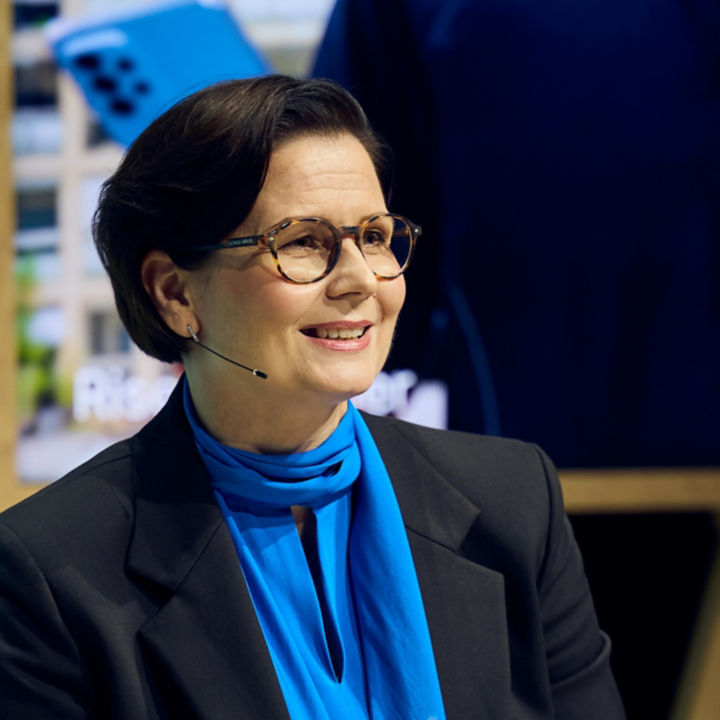
As cities around the world expand rapidly, so do their emissions. With buildings responsible for nearly 40%* of global CO₂ emissions, the path to a low-carbon future runs straight through the built environment. At COP 30, the 30th United Nations Climate Change Conference in Brazil, world leaders are turning their attention to green buildings to help meet global climate targets. The conference’s Buildings Breakthrough initiative to make near-zero emission and climate-resilient buildings the new normal by 2030, strengthens that focus, a challenge that Kirsi Simola-Laaksonen SVP, sustainability and environment at KONE is already meeting head on.
“Modernizing buildings for decarbonization isn’t just a trend – it’s shaping the future of cities,” Simola-Laaksonen says. “But it also makes such good business sense. The wins for our customers are so numerous, they’d take more than my ten fingers to count.”
Green buildings are transforming the way we live and work. They’re designed to reduce environmental impact while creating spaces that are efficient, comfortable, and safe. By using energy-smart systems, sustainable materials, water-saving solutions, and intelligent automation, green buildings cut emissions and lower operating costs. But the benefits go beyond the planet –they mean healthier indoor environments, lower energy bills, and stronger property values.
KONE customer projects such as our collaboration in Tallinn’s Ülemiste City and fully modernized Hotel Marcel in the U.S. show sustainable solutions in action – demonstrating how even existing buildings can adapt to changing standards.
KONE is also a member of several Green Building Councils around the world. The Councils promote sustainable building practices through standards, education, and policy advocacy that reduce the environmental impact of the built environment. More than 85 national councils are part of the World Green Building Council network, spanning across five regions worldwide.
* Including both operational emissions and embodied carbon from materials and construction processes. Source: UN Environment Programme & Global Alliance for Buildings and Construction. (2025). Global Status Report for Buildings and Construction 2024/2025.
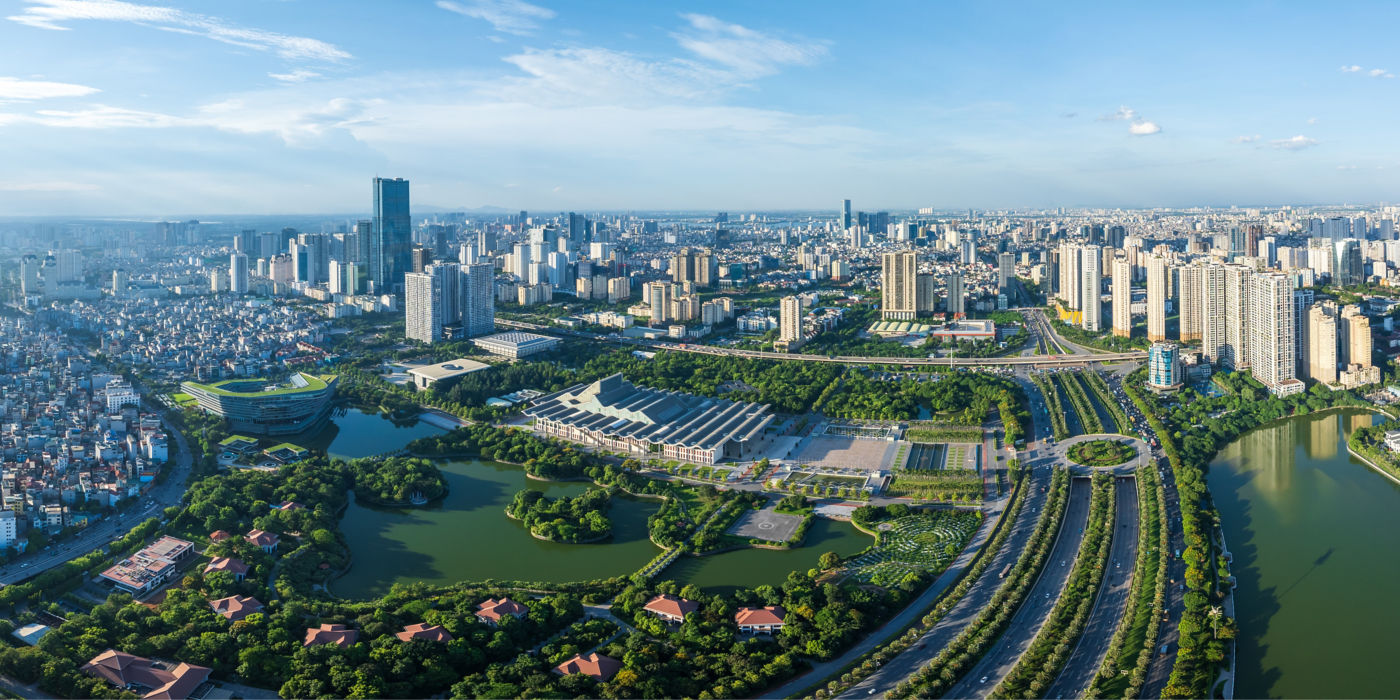
Refining local practices in Vietnam

Vietnam, home to more than 550 green-certified buildings, offers a compelling example of how rapidly developing cities can embrace sustainability at speed and scale. With fast urbanization, rising climate pressure from typhoons and droughts and growing energy demand from an expanding population, building green has become a national priority.
Douglas Lee Snyder, executive director of the Vietnam Green Building Council (VGBC) has been working at the front lines in Hanoi since 2012, helping Vietnam translate global green building principles into local practice. Green buildings follow seven key principles defined by the World Green Building Council: energy, resilience, circularity, water, biodiversity, health, and equity and access. Green buildings are typically certified through systems like LEED, BREEAM, and WELL, which set standards for environmental performance and occupant health. In Asia, many countries have their own independent national certification systems.
“Green building standards in Vietnam have developed their own identity, shaped by local geography, climate, and the materials available here. You can’t just copy and paste sustainable standards from somewhere else as each country needs to adapt them to local conditions,” he explains.
For instance, Vietnam’s LOTUS certification prioritizes passive design, such as shading, natural ventilation, and smart building orientation, to keep indoor temperatures down. The certification also rewards the use of locally sourced materials, which cuts transportation emissions and fuels the local economy.
Vietnam’s green building practices also reflect local environmental challenges, like excessive sand extraction or insufficient water management. Inspired by the concept of ‘sponge cities,’ planners are also using green roofs, porous pavements, and urban wetlands to capture and reuse rainwater, helping cities become more resilient.
“Sustainability used to be optional. Now it’s becoming part of normal practice,” Snyder says.
Elevators as a key part of green buildings

Elevators play a vital role in green buildings, helping to achieve energy efficiency and sustainability goals. KONE was the first elevator and escalator company to have its products independently recognized under Vietnam’s LOTUS Green Product Certification.
At KONE, we see green building certifications as a powerful catalyst for sustainable urban transformation. For many customers, they’re not just a sustainability label but a gateway to green financing, stronger investor confidence, and long-term asset value.
“The more we align with national frameworks, the easier it is for our customers to meet certification targets and decarbonize their product portfolios. Our partnerships with green building councils around the world is vital in this,” Simola-Laaksonen says.
Green building development is also driven by innovations that cut emissions and recover energy. KONE’s regenerative drive systems, for instance, capture energy every time an elevator brakes and feed it back into the building grid, recovering up to 40 percent of an elevator’s energy consumption. KONE also actively explores innovative, sustainable materials for elevators and escalators to replace carbon-intensive steel while maintaining safety and performance. For example, KONE’s UltraRope® elevator rope, made from carbon fiber, is lighter and more durable than steel, reducing energy use and extending the life cycle of high-rise elevators.
“Elevators and escalators are part of every large building,” Snyder notes. “When those systems use regenerative drives or recycled or low-carbon materials, the impact multiplies quickly across the market.”

Buildings make people thrive
Besides climate goals, sustainability should also serve people. This is in line with KONE’s customer-first approach to sustainability: helping building owners and developers decarbonize while enhancing the performance and comfort of the spaces people use every day.
“When you make a building greener,” Snyder says, “you’re not only improving its environmental performance but you’re improving the experience for everyone. People feel the difference in the air, in the light, in the way the building works.”
“That’s exactly what motivates KONE’s approach: innovation that serves both business and people,” Simola-Laaksonen says. The benefits for people are clear: offices with natural light and clean air boost productivity, hospitals with calmer acoustics aid patients’ recovery, and schools with better ventilation help children learn.
Snyder says some misconceptions still linger toward green buildings. “People assume green buildings are more expensive, but that’s not really true,” he says. “If you factor in lower energy and water bills, and the higher resale or forward value of certified buildings, the long-term business case far outweighs the initial investment.”
“In the end, it’s not just about carbon,” Snyder says. “It’s about creating places where people can really thrive.”
What makes a building green?
- Energy-efficient by design – uses less power through smart systems, low energy lighting, insulation, and renewable energy.
- Built with low-carbon materials – chooses recycled, responsibly sourced, and circular raw materials and components.
- Optimized for operations – runs efficiently with digital monitoring, automation, and predictive maintenance.
- Healthy for people – maximizes daylight, clean air, and comfort for occupants.
- Water-wise – captures rainwater, reuses grey water, and conserves water use.
- Certified for sustainability – meets recognized Green Building Council standards like LEED (Leadership in Energy and Environmental Design), BREEAM (The Building Research Establishment Environmental Assessment Method), WELL (WELL Building Standard), or country-driven standards like LOTUS Green Product Certificate.